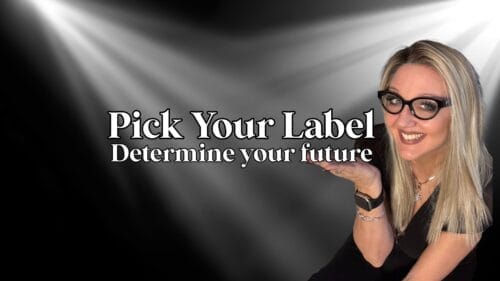
or someone will assign you a role
you never auditioned for

Pick Your Label
For most of our lives, labels are handed to us.
Some are small and harmless.
Some quietly shape the direction of our lives.
Employee.
Caretaker.
The responsible one.
The quiet one.
The woman who had potential.
The woman who “used to be” something.
Sometimes the labels come from work.
Sometimes from family.
Sometimes from systems that quietly decide what stage of life we’re supposed to be in.
And if you live long enough, something strange starts to happen.
You realize many of those labels were never actually yours.
They were assignments.
Expectations.
Convenient categories that made other people comfortable.
But the longer you carry them, the heavier they become.
At some point — and for many people it happens later in life — a realization begins to form.
You don’t have to keep the label that was handed to you.
You can pick another one.
That’s where Pick Your Label begins.
Not as a slogan.
Not as a motivational phrase.
As a decision.
The decision to stop letting past definitions dictate the future.
The decision to stop negotiating your identity with people who are more comfortable with the old version of you.
The decision to step out of roles that were designed for an earlier chapter of life.
Because labels do more than describe us.
They guide our behavior.
If someone carries the label “too old,” they quietly stop attempting new things.
If someone carries the label “just a mom,” they shrink the scope of what they believe they are allowed to build.
If someone carries the label “used to be talented,” they slowly convince themselves their best work is behind them.
Most of the time this happens without anyone noticing.
The label becomes a boundary.
And the boundary becomes a life.
But labels are not laws.
They are choices — sometimes made by others, sometimes made by us.
The moment someone recognizes that, something changes.
Instead of asking, “What am I allowed to be at this stage of life?” the question becomes something very different:
What label actually fits the life I want to live now?
That question can be unsettling at first. It requires letting go of the expectations that have followed you for years. It may require disappointing people who preferred the older version of you.
But it also opens a door that many people didn’t realize was there.
Because when you pick the label yourself, you begin designing the next chapter intentionally.
Not based on habit.
Not based on what other people assumed you would become.
But based on what is still possible.
And the truth is, far more is possible than most people have been led to believe.
The point of Pick Your Label isn’t reinvention for its own sake.
It’s clarity.
Clarity about who you are now.
Clarity about what matters in this stage of life.
Clarity about the direction you’re choosing to move.
Once that clarity exists, decisions become simpler. Actions begin aligning with identity instead of contradicting it.
And when enough people begin choosing their own labels, something larger happens.
The old assumptions about age, stage of life, and what people are “supposed” to do begin to break apart.
People start building things they were told were too late.
They start speaking in rooms where they once stayed quiet.
They stop waiting for permission that was never coming.
They simply pick a label that fits the life they are ready to live.
And then they move forward from there.
The Labels We Carry
From the moment we’re old enough to understand language, labels begin attaching themselves to us.
Some are simple descriptions.
Some are expectations disguised as compliments.
Some are quiet limitations that follow us for decades.
Smart. Reliable. Difficult. Responsible. Emotional. Natural leader. Background player.
Over time, these labels become shorthand for who we are supposed to be. They influence how teachers treat us, how employers see us, how families describe us, and eventually how we begin describing ourselves.
The strange thing about labels is that most of them are assigned quickly but carried for years. A moment, a job title, a life stage, or someone else’s opinion can turn into a definition that follows someone far longer than it should.
Most people never stop to question them.
Not because the labels are accurate, but because they feel permanent.
Where Labels Come From
Labels rarely begin with bad intentions.
They emerge from systems that rely on quick categorization.
Workplaces need titles.
Families settle into roles.
Society organizes people by age, profession, and stage of life.
These systems simplify a complicated world. But they also freeze people into identities that may only have been true for a short period of time.
Someone who once managed a team becomes “the manager,” even after they want to build something entirely different.
A woman who spent years raising children becomes “just a mom,” even when her ambitions stretch far beyond the boundaries of that phrase.
Someone who experienced failure once becomes “the person who tried and couldn’t.”
Labels are efficient.
But efficiency is not the same thing as truth.
When a Label Stops Fitting
At some point in life, many people experience a quiet moment of friction.
The label they’ve been carrying no longer reflects who they are becoming.
Sometimes the realization arrives gradually. A sense that something about the current role feels smaller than it once did.
Sometimes it arrives suddenly. A life change, a new opportunity, or simply the awareness that time is moving forward.
The discomfort that follows can be confusing.
People often assume the tension means they should try harder to fit the existing label. But the tension is usually telling them something else entirely.
The label has expired.
What once described you accurately may now be limiting you.
The Permission Myth
One of the reasons people hold onto outdated labels is the belief that someone else must authorize the change.
They wait for recognition.
They wait for approval.
They wait for circumstances to shift first.
But permission rarely arrives in the way people expect.
Systems that benefited from the original label have little incentive to update it. The people who knew you in a previous role may prefer the version of you they already understand.
Waiting for external permission can quietly delay the next chapter of someone’s life for years.
The realization that breaks that cycle is simple but powerful.
No one else assigns the label for your next chapter.
You do.
What It Means to Pick Your Label
Picking your label is not an act of denial about the past.
It is an act of authorship over the future.
It means recognizing that identity can evolve just as life circumstances do. The person you were ten or twenty years ago may have been accurate for that time, but it does not need to define every stage that follows.
Choosing a label intentionally forces a different kind of question:
Instead of asking what role you’ve been given, you ask what role reflects the direction you are moving.
Creator. Builder. Explorer. Mentor. Founder. Advocate.
The label becomes a declaration of direction rather than a summary of history.
Identity Shapes Action
Once someone picks a label consciously, their behavior begins to shift.
A person who adopts the label “writer” begins writing more consistently.
Someone who identifies as a builder starts looking for problems worth solving.
Someone who sees themselves as a leader begins speaking differently in rooms where they once stayed quiet.
The change is subtle at first, but it compounds.
Identity influences decisions, and decisions influence outcomes.
This is why labels matter so much. They quietly determine the range of actions someone believes are available to them.



Why This Matters Now
For many people, the later chapters of life are the first time they pause long enough to examine the labels they’ve been carrying.
Responsibilities shift. Children grow up. Careers evolve. The pace of earlier decades changes.
That pause can reveal something surprising.
Many people are still living under labels that were assigned twenty or thirty years earlier.
Labels that once made sense may now feel restrictive.
But the moment someone recognizes that they can pick differently, the possibilities expand again.
The next chapter becomes something designed rather than inherited.
The Movement Behind the Idea
When individuals begin choosing their own labels, the change is personal.
But when large numbers of people do it at the same time, it becomes cultural.
Assumptions about age begin to dissolve.
Career timelines become more flexible.
People stop measuring their lives against outdated expectations.
The idea behind Pick Your Label is not about constant reinvention.
It is about conscious identity.
About recognizing that the labels we carry influence the lives we build, and that choosing them intentionally is one of the most powerful decisions a person can make.
The Question That Changes Everything
At some point, everyone reaches a moment when the old label no longer fits.
The question that follows is simple.
Will you keep carrying the label that was handed to you…
or will you pick the one that reflects the life you are ready to live now?
That decision belongs to you.
And it always has.
The Moment You Notice the Label
Most people do not wake up one morning and decide to question the labels they have been carrying.
It usually begins much more quietly.
A moment at work when you realize the role you once wanted now feels too small. A conversation where someone describes you in a way that no longer feels accurate. A project you secretly want to start, paired with the immediate thought that it might be “too late” or “not for someone like you.”
That thought is often the label speaking.
Labels have a way of settling so deeply into the background that we begin to mistake them for facts. They shape our decisions without ever announcing themselves.
But once you notice them, something shifts.
You begin to hear the language more clearly.
“I’m not the kind of person who does that.”
“That opportunity is for younger people.”
“I used to be good at that, but not anymore.”
“That’s not my role.”
These phrases often sound reasonable on the surface. They appear responsible, practical, even realistic.
But very often they are simply the voice of an outdated label trying to maintain its place.
Recognizing that voice is the first step in reclaiming the next chapter of your life.
Because the moment you hear the label clearly, you also realize something else.
It is not a rule.
It is a story that has been repeated long enough to feel permanent.
And stories, unlike rules, can be rewritten.
The Power of Naming the Next Chapter
Once someone begins questioning the label they’ve been carrying, a natural question follows.
If that label no longer fits, what does?
This is where many people hesitate. Letting go of an old identity can feel unsettling, even when the identity has become restrictive.
The mind looks for certainty. It wants to know that the next step will be accepted, supported, and successful.
But clarity rarely arrives all at once.
Instead, it begins with a simple act of naming.
Choosing a label for the next chapter does not require perfect confidence. It requires direction.
Someone who has spent years feeling invisible may pick the label creator.
Someone who has spent decades supporting other people’s ideas may pick the label builder.
Someone who has spent years navigating complex experiences may pick the label guide or mentor.
The label becomes a compass.
It does not define every step ahead, but it points toward the direction you intend to move.
And once that direction exists, the next decisions begin to align with it.
The person who picks the label writer begins writing.
The person who picks the label advocate begins speaking.
The person who picks the label entrepreneur begins building.
Identity quietly reshapes behavior.
Over time, those behaviors reshape a life.
Why People Resist Picking Their Label
If picking your label is so powerful, why don’t more people do it?
The answer is surprisingly simple.
For most of our lives, identity has been something that was assigned rather than selected. School systems sort people early. Workplaces organize people by titles and departments. Families settle into familiar roles that can last for decades.
Because of this, many people grow accustomed to waiting for identity to arrive from the outside.
A promotion brings a new title.
A life stage brings a new role.
A system decides what someone is “supposed” to be next.
Picking your label reverses that pattern.
Instead of waiting for the next definition to arrive, you claim authorship over it.
That shift can feel uncomfortable at first. It asks a person to step slightly ahead of the recognition that usually accompanies a new identity.
In other words, you begin acting in alignment with the label before the rest of the world has caught up to it.
For some people, that gap between the decision and the recognition feels risky.
But the truth is that most meaningful transitions in life begin exactly that way.
A writer writes long before the world calls them one.
A builder starts building before anyone recognizes the structure taking shape.
A leader begins speaking before the room fully understands who they are listening to.
Picking your label means stepping into the next chapter before the old systems have updated their understanding of you.
It requires a small amount of courage.
But it also creates something extremely powerful.
Momentum.
Because once the label changes internally, behavior begins to change externally. The person who has picked their label begins making decisions that match the direction they have chosen.
Small actions accumulate.
And slowly, almost quietly, the life that once felt confined by an outdated label begins expanding again.
The Labels That Hold People Back the Longest
Not all labels carry the same weight.
Some fade naturally as life changes. A job title eventually disappears when someone changes careers. A temporary role ends when circumstances shift.
But certain labels have a way of lingering far longer than they should.
They become quiet assumptions about what a person is allowed to do next.
One of the most common is the label of “too late.”
People begin to believe there is a proper timeline for everything that matters. A proper age to start something. A proper moment to change direction. A proper stage of life for ambition.
If that moment appears to have passed, the label settles in: too late to begin again.
But history quietly contradicts that idea everywhere you look. People launch companies, write books, learn new skills, and reshape their lives well beyond the timelines society once suggested.
The label was never a rule.
It was simply an assumption repeated often enough to feel permanent.
Another powerful label is “not that kind of person.”
This label often appears when someone considers stepping into something unfamiliar.
“I’m not the kind of person who starts a business.”
“I’m not the kind of person who speaks publicly.”
“I’m not the kind of person who does creative work.”
These statements sound like personality descriptions, but most of the time they are simply echoes of earlier expectations.
Someone once decided what role a person seemed suited for, and the description stayed in place long after the circumstances changed.
The label narrows the range of possibilities without anyone consciously choosing to limit themselves.
There is also the label of “used to be.”
This one often arrives quietly after a major life transition. A former athlete becomes someone who “used to compete.” A professional becomes someone who “used to work in that field.” A person who once pursued big ideas becomes someone who “used to have those ambitions.”
The phrase sounds harmless, but it quietly moves identity into the past.
When a person begins describing themselves primarily through what they once did, it becomes harder to imagine what they might still become.
The common thread between these labels is simple.
None of them were deliberately selected.
They appeared through habit, through culture, through other people’s expectations, or through a moment that became frozen in time.
That is why the idea of Pick Your Label matters.
Because once someone realizes the labels shaping their life were never consciously chosen, a new possibility appears.
They can pick a different one.
Not as an act of denial about the past, but as a declaration about the future.
The label becomes a statement of direction rather than a summary of history
What Happens When You Pick Your Label
The moment someone picks their label, something subtle begins to shift.
From the outside, very little may appear different at first. The same environment, the same responsibilities, the same daily routines may still be present.
But internally, the orientation has changed.
Instead of moving through life based on the labels that accumulated over time, a person begins making decisions based on the identity they have intentionally picked.
That difference matters more than it might seem.
When someone picks the label builder, they begin noticing problems that could become projects.
When someone picks the label creator, ideas that once stayed in notebooks begin moving into the world.
When someone picks the label advocate, conversations they once avoided start becoming opportunities to speak.
The shift does not happen because circumstances magically improve. It happens because identity quietly influences behavior.
The label becomes a filter through which decisions are made.
Questions change.
Instead of asking, “Am I allowed to do this?” the question becomes, “Is this something a person with this label would pursue?”
The answer often leads to action.
Small actions begin to accumulate. A new project begins. A new skill develops. A conversation that once felt intimidating becomes manageable.
Over time those actions compound, and the life that once felt constrained by an outdated label begins expanding again.
It rarely happens overnight.
But it does happen consistently when identity and action begin aligning with each other.


The Difference Between Reinvention and Direction
The idea of picking a label is sometimes mistaken for reinvention.
People imagine dramatic transformations, sudden changes, or completely abandoning everything that came before.
But that is not what this concept is about.
Picking your label is less about starting over and more about recognizing direction.
Every person carries experiences, skills, and perspectives that were shaped by earlier chapters of life. Those experiences are not erased when someone picks a new label.
In many cases, they become the foundation that makes the next chapter possible.
A person who spent years managing teams may discover that the skills they developed make them a strong mentor or founder.
Someone who navigated complex life experiences may discover that their perspective allows them to guide others facing similar challenges.
The earlier chapters were never wasted. They simply prepared the ground for something that had not yet been named.
Picking your label brings that direction into focus.
It shifts identity from a record of what has already happened to a declaration of where someone intends to go next.
And once that direction becomes clear, the future begins to feel less like something that arrives unexpectedly and more like something that can be shaped intentionally.
The Quiet Courage of Moving First
One of the most difficult parts of picking a new label is that recognition rarely arrives immediately.
The world is accustomed to the earlier version of you.
People who knew you in previous roles may still see you through that lens. Systems that categorized you years ago may continue using the same descriptions.
For a period of time, there can be a gap between the label you have picked and the label others still assume.
This gap requires patience.
It requires the quiet courage to continue moving in the direction you have chosen even before the outside world fully recognizes it.
But over time, consistency closes that gap.
The writer who continues writing eventually becomes known as one.
The builder who continues building eventually becomes recognized for what they have created.
The leader who continues speaking eventually finds that people begin listening.
Recognition tends to follow action, not the other way around.
Picking your label is the moment when someone decides not to wait for that recognition to begin.
They start moving first.
And gradually, the world updates its understanding of who they are.
When Enough People Pick Their Label
Something interesting happens when this idea spreads beyond one person.
At first, picking your label feels personal. It is a quiet decision about direction, identity, and the next chapter of a life.
But when many people begin doing the same thing, the effect grows larger.
Assumptions that once seemed permanent begin to weaken.
The idea that ambition has an expiration date starts to look outdated. The belief that certain opportunities belong only to certain stages of life begins to fade. People who once waited quietly for permission start moving forward on their own terms.
One person picking their label may change the course of a single life.
Thousands of people picking their labels begin changing expectations for everyone.
Suddenly the examples are everywhere.
Someone launches a business long after others assumed their career path was settled.
Someone begins creating work that reaches audiences they never imagined when they were younger.
Someone steps into leadership after years of being told they were better suited to supporting roles.
Each of these decisions may look individual from the outside, but together they form a pattern.
The pattern reveals something simple.
People were never as limited as the labels suggested.
They were simply waiting for someone to question them.
Why This Idea Resonates Now
Every era has moments when people begin rethinking the assumptions they inherited.
The pace of change in technology, work, and culture has accelerated in ways that previous generations rarely experienced. Careers shift more quickly. Opportunities appear in places that did not exist a decade earlier. Entire industries are built and rebuilt within a single generation.
In an environment like that, rigid labels struggle to keep up.
A title that once defined someone’s role may become irrelevant as new fields emerge. A career path that once felt predictable may change direction several times.
This environment creates a different kind of question.
If the world itself is changing constantly, why should identity remain fixed?
The idea behind Pick Your Label speaks directly to that moment.
It recognizes that people are capable of adapting, evolving, and redefining themselves far more often than traditional expectations allowed.
Instead of waiting for systems to update their categories, individuals can take the lead.
They can pick a label that reflects the direction they are moving rather than the assumptions that once defined them.
A Different Way to Think About the Future
For many people, the future has traditionally been framed as something that unfolds in predictable stages.
Education leads to a career.
A career leads to stability.
Stability leads to a quieter stage of life.
That sequence made sense in a world where opportunities changed slowly.
But the modern world rarely follows such a simple timeline.
People discover new interests later in life. New industries appear that did not exist earlier. Skills developed in one field suddenly become valuable in another.
The future is no longer a single path.
It is a landscape of possibilities that continues expanding.
Picking your label is a way of navigating that landscape intentionally.
Instead of asking what stage of life you are supposed to be in, you ask a different question:
What direction do I want to move now?
That question shifts the conversation from limitation to possibility.
It replaces the quiet assumption that life narrows with age with a recognition that it can expand in unexpected ways.
The Label That Matters Most
At its heart, Pick Your Label is not about choosing impressive titles or dramatic identities.
It is about ownership.
Ownership of direction.
Ownership of identity.
Ownership of the next chapter of a life that is still unfolding.
The label someone picks does not need to impress anyone else.
It only needs to reflect the direction they intend to move.
Because once the label is clear, action tends to follow.
And action, repeated over time, shapes outcomes far more powerfully than expectations ever could.
The Invitation
Every person eventually reaches a moment when the label they have been carrying no longer fits.
Sometimes the realization arrives quietly. Sometimes it arrives through a change in circumstances. Sometimes it appears as a persistent feeling that something larger is still possible.
That moment presents a simple choice.
Continue carrying the label that was handed to you.
Or pick the label that reflects the life you are ready to build next.
The decision does not require permission.
It only requires the willingness to recognize that identity is not fixed, and that the direction of a life can change whenever someone decides to claim authorship over it.
The next chapter is rarely written by the labels we inherit.
It is written by the ones we pick.
A Moment When a Label Changes
Sometimes the shift from an assigned label to a chosen one happens quietly.
Other times it happens in a moment that forces a person to look directly at the label they have been given.
In 2014, a blog began called Chronically Positive Mom. It was a place to write about life, perspective, and resilience while navigating serious health challenges. At the time, the label that seemed to fit was simple: someone managing illness while raising a family and trying to remain positive in the middle of it.
For several years, that was the chapter.
Then in 2018, something happened that changed the way those labels were viewed.
Doctors said the words no one expects to hear.
There may only be a year left.
In an instant, a new label appeared, whether it was spoken out loud or not.
A life with an expiration date.
It would have been easy to accept that description and shrink life down to fit inside it. Many people in that situation understandably would.
But that moment created a different realization.
If the label now attached to life had an expiration date, then it was time to pick a different one.
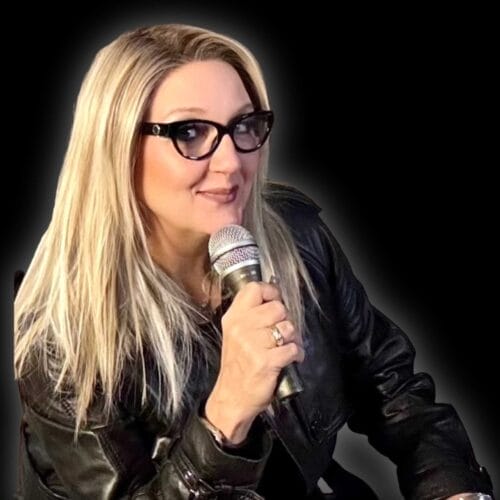
My son had bought a microphone so he could start a podcast, but he never did. So I asked him if I could borrow it and the rest is history!
I bought it from him and still have it today. And he, never started a podcast.
That year, the blog expanded into a podcast. There was no formal background in broadcasting and no guarantee anyone would listen. The only thing that mattered was the decision to begin.
The moment that microphone was turned on, the old label began losing its power.
In its place was a new one.
Podcaster.
It was a small word, but it carried a very different direction. Instead of focusing on the limits of time, the focus shifted to using the voice that was still there.
One conversation led to another. One episode led to the next. And slowly, that label began shaping an entirely different chapter than the one that had been predicted.
That is the essence of Pick Your Label.
Sometimes the labels we are given describe a situation.
But they do not have to define the direction of our lives.
Even in the moments when circumstances seem to narrow the future, a person still has the power to decide which label will guide the next step forward.
And sometimes that decision begins with something as simple as picking up a microphone.
The Label That Shapes the Next Chapter
Every life collects labels.
Some arrive through achievement. Some arrive through circumstance. Some appear so gradually that we barely notice them forming.
Over time those labels begin to shape the way we see ourselves and the way others see us. They influence what we attempt, what we avoid, and what we quietly assume is no longer possible.
Most of the time we carry them without questioning where they came from.
But every person eventually reaches a moment when one of those labels no longer fits.
Sometimes it happens because life changes. Sometimes it happens because a person changes. Sometimes it happens because the future begins calling louder than the past.
That moment presents a simple choice.
Continue carrying the label that was handed to you.
Or pick the label that reflects the life you intend to live next.
The decision does not erase the past. Everything that came before still matters. The experiences, the lessons, the struggles, and the victories all become part of the foundation that supports the next chapter.
But the direction of that chapter does not have to be dictated by an outdated description of who you once were.
The label you pick today becomes the compass that guides the steps that follow.
Someone who picks the label creator begins creating.
Someone who picks the label builder begins building.
Someone who picks the label voice begins speaking.
The label quietly changes the questions a person asks themselves. Instead of asking whether something is allowed, they begin asking whether it aligns with the direction they have chosen.
Small actions follow.
Those actions accumulate.
And over time the life that once felt limited by an inherited label begins expanding again.
That is the quiet power behind Pick Your Label.
It is not about reinvention for its own sake. It is about recognizing that identity is not fixed, and that the next chapter of a life can be shaped intentionally.
The labels we inherit may describe where we have been.
But the labels we pick determine where we go next.